
GREEN STRATEGY
- GREEN STRATEGY
- Sustainable Shipping Solutions
- GOVERNANCE
- OPERATIONAL EXCELLENCE
- SUSTAINABILITY REPORTS
Green Vision, Mission and Targets
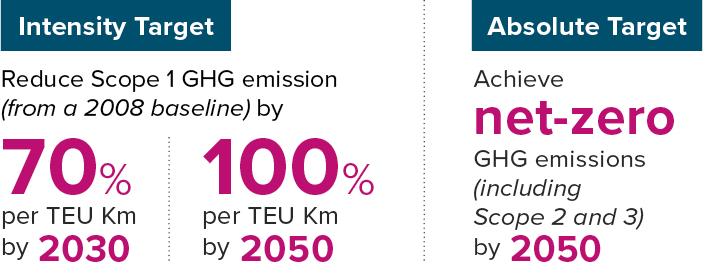
In April 2022, ONE announced our new Green Strategy. ONE’s Green Strategy sits at the top of our management agenda, as does our commitment to achieve net zero by 2050, thereby playing an important role in global environmental conservation.
Green Vision
To be a global leader in the realization of environmentally sustainable shipping
Green MISSION
We will achieve carbon net-zero shipping in order to protect our planet via lean and agile best practices and open collaboration
Environmental Target
Environmental Management System (EMS)
The environmental management system was first established in 2018 to serve as the backbone of ONE's environmental protection plan, where all employees were guided and trained. Additional training was also conducted for management team and ISO project team members.
ISO 14001 is an international EMS standard set by the International Organization for Standardization (ISO). Requirements for the EMS are stipulated in ISO 14001.
We have received our ISO14001:2015 certificate on 18 Oct 2018 from ClassNK. The validity of this certificate has been renewed until 17 Oct 2027.
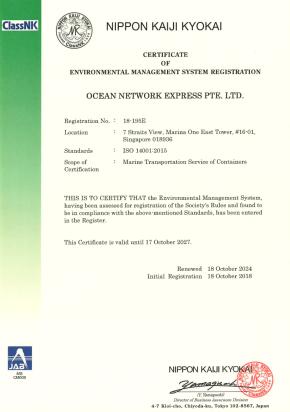
Click here to download copy (PDF).
Achievements & Partnerships
Since its establishment in 2018, ONE has clinch several awards and partnerships in her journey towards decarbonisation. We believe in close collaboration and proactive partnerships in order to deliver our sustainability commitments. As such, ONE maintains strong relationships with industry partners, associations, government and business partners.
Sustainability Awards and Certifications





Memberships & Associations









Preservation/ Biodiversity
(1) Oil Spills Prevention
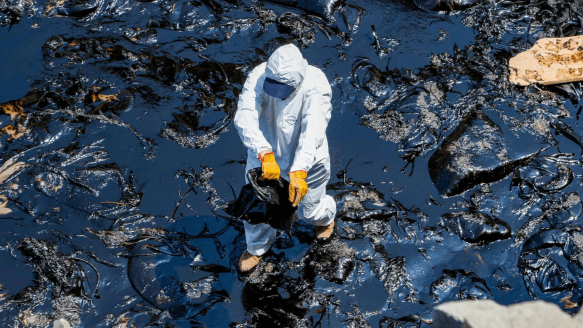
At ONE we are also prepared for the unexpected. Unplanned events and loss of containment can result in some of the most significant environmental impacts in our industry. To address this risk, our marine safety & quality team developed a Crisis Management Manual that sets out the appropriate response procedures in the event of cargo trouble or maritime accidents such as spills, ship collisions, ship damage, engine trouble, cargo damage and typhoons. In addition, the manual provides clear roles and responsibilities including CEO and reporting procedures when an accident occurs. Our regional managers went through a crisis management training to ensure the emergency preparedness of our organization. Large-scale maritime accident response training will be conducted at least once a year to ensure the effectiveness of the Crisis Management Manual and build capabilities amongst employees, ensuring our staff are equipped to respond to maritime accidents promptly and effectively.
(2) Ballast Water Management
Taking on and discharging ballast water during voyage can provide a pathway for species transfer between different ecosystems. This could result in the release of harmful invasive and non-native algae, plants or animals into new environments. The IMO adopted the Ballast Water Management (BWM) Convention in 2004, with its provisions entering into force from September 2017. The Convention requires ships in international traffic to implement a Ballast Water and Sediments Management Plan, to carry a Ballast Water Record Book, and to apply ballast water management procedures to meet the standards set. Our operating fleet at this stage comprises of more than 200 ships. These ships are chartered from our parent companies and ship owners who are compliant with environmental regulations and committed to reducing their environmental footprint. Our fleet management team will work with ship owners to select the appropriate ballast water treatment system and establish operational guidelines to protect biodiversity during transportation.
(3) Marine Species Protection
Plant-A-Coral, Seed- A-Reef
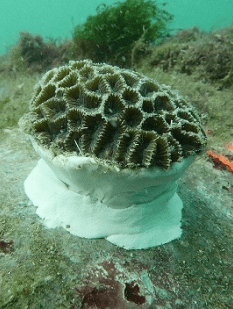
As part of ONE's effort to conserve the marine biodiversity, we have worked with The Garden City Fund's Plant-A-Coral, Seed-A-Reef programme to support the habitat enhance efforts at Singapore Sister's islands Marine Park through ONE's donation. The main objective is to strengthen our marine biodiversity by providing areas for marine organisms to grow and reef fish to seek refuge. With this donation, ONE want to raise awareness of the existing issue on the environment and hope like minded individuals can be more environmentally aware on how we can play a part in preserving our biodiversity and environment.
Key Initiatives
We envision ONE to be a global leader in the realisation of environmentally sustainable shipping and green strategy is a top of our management agenda. We have also placed great emphasis in our commitment to achieve net zero by 2050, as well as global environmental conservation.
Besides our pledge to become net zero, ONE recognises the need to make continuous investment in green assets and technologies while taking appropriate actions to meet our target.
We must all work differently and put sustainability at the heart of our business in order to ensure the long term sustainability of ONE and as such, we have identified seven key initiatives:
Decarbonisation Initiatives

Investment

Fuels

Management

Efficiency

Ecosystem Building
Environmental Initiatives

Recycling

Conservation
Decarbonisation Initiatives
Investment
Green investments are crucial for incremental efficiency increase and innovative technologies to achieve net-zero emissions. You may also be aware of our fleet modifications to enhance fuel performance, such as the attachment of the energy-saving propeller boss cap and modification of the bulbous bow. These are forms of technologies that enhance our efficiency incrementally, alongside frequent maintenance of our existing vessels is necessary to keep them in best conditions.
Beyond these technologies, we are also looking into various forms of green investments such as talents, who have the operational knowledge and expertise, particularly for zero-emission vessels, as well as hardwares, where we will engage in the replacement of the older fleet with new and more fuel-efficient vessels. By 2030, ONE will deploy its first alternative fuel ships which are able to achieve both net zero GHG emissions while increasing vessel capacity simultaneously.

Fuels
Presently, there is no clear answer to which alternative fuel can help achieve net-zero for the maritime industry and each alternative fuel is in different stages of development and has different characteristics. ONE has conducted several biofuel trials in the past few years and while we recognize the supply constraints for scaling up biofuel usage, biofuels are still useful as a support fuel in specific cases such as pilot fuel for green ammonia and green methanol.
While we do not eliminate any alternative fuels currently, ONE plans to reduce reliance and replace existing conventional fuel vessels by 2050. ONE will thus prioritise R&D and investments for green ammonia, green methanol and green methane related vessels and technologies.
Management
We have highlighted three main actions for carbon management.
Firstly, we have introduced an internal carbon pricing system on a trial basis since 2021 and we intend to use it continuously as one of the indicators to guide investment decisions.
Secondly, we will develop low-emissions service offerings for our customers using low-carbon fuels. At present, we are also preparing a carbon calculator to measure the emissions from our services to enable our customers to identify their carbon footprint accurately.
Lastly, we are studying green-related technologies such as carbon capture and storage. This will be conducted in tandem with regulatory authorities in each country.
Efficiency
On top of existing methods, such as improving vessel size, vessel speed reduction and the use of inhouse fleet monitoring systems, ONE recognise the importance of improving fuel efficiency through other programs. We have made several efforts to pursue operational efficiency in order to reduce our greenhouse gas emissions and this includes optimising product performance, such as the continuous review of vessel proforma, improving asset portfolio through the modification for safe bunker and loadability such as the use of antifouling paint or Alternative Maritime Power (AMP) retrofit.
Besides new technology and efficiency programs, we will also continue to evaluate and invest in digitalisation tools and initiatives which allows improvement of our operational efficiency and to achieve fuel consumption savings. Existing milestones such as the Digitalisation Strategy Roadmap have commenced since 2020 and we are looking into investing in future technologies to continually improve our operational efficiency and reduce carbon emissions.
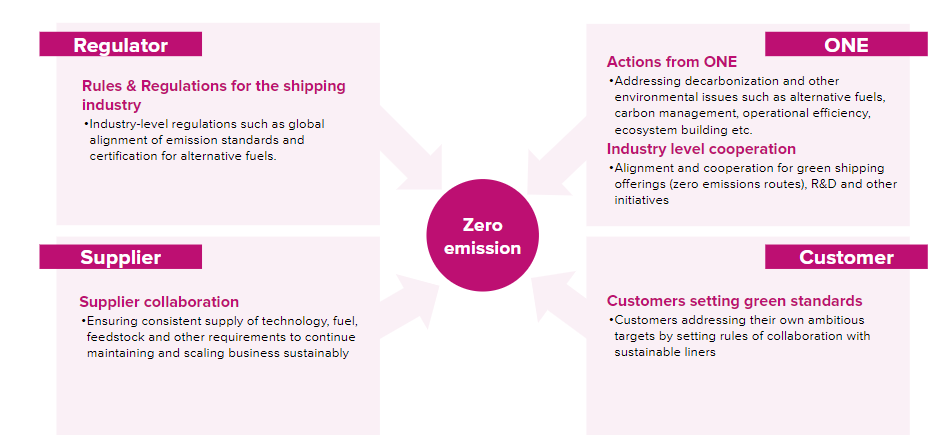
Ecosystem Building
Environmental Initiatives
Recycling
We believe that ship recycling is critical to ensure sustainable vessel operations from start to end of life. As we plan to own vessels in the near future, we will audit dismantling sites used by third party organisations to minimise the damage and emissions associated with ship breaking and ship recycling. Additionally, this will ensure the recovery of scrap metal, and the reduction of both greenhouse gas emissions and pollution to the environment.
In line with this commitment, ONE has established a dedicated Ship Recycling Policy, which outlines our principles and procedures to ensure safe, environmentally sound, and transparent ship recycling practices. The policy is based on international standards including the Hong Kong International Convention for the Safe and Environmentally Sound Recycling of Ships (2009) and the EU Ship Recycling Regulation (2013). It also reflects our participation in the Ship Recycling Transparency Initiative (SRTI), which we joined in 2025.
Please find the signed policy here: [ONE Ship Recycling Policy]
conservation
Besides ship recycling, ONE’s new green strategy also places emphasis on environmental conservation. As frequent users of the ocean, we also play the role of a custodian to the ocean. ONE aims to prevent ecological damage and proactively lead initiatives to help regenerate the ecosystem. In order to meet this objective, we plan to participate in ecological conservation programs, such as the conservation of marine life, and ensure zero significant spills for all vessels.
Furthermore, we aim to establish our Environment Fund in 2022 to finance environmental related activities which will support long-term efforts towards material environmental themes and serve as a platform to educate employees and stakeholders on our environment.
Operational efficiency
Ocean Network express aims to deliver goods safely, timely while priotitising environmental protection and energy conservation. In order to achieve this mission, ONE place great emphasis in reducing our greenhouse gas (GHG) emissions and we have been making progress since our establishment in 2018.
To work towards our targets, we have implemented initiatives aimed at improving our operational and fleet fuel efficiency to reduce energy consumption and CO2 emissions.
Since 2020, we have been introducing measure to improve our fleet fuel efficiency. These include modification of bulbous bow to reduce wave resistance, replacement with high efficiency propellers and attachment of special propeller boss cap. These measures are expected to reduce up to 10% of emission from fuel use per vessel. We will continue to implement these modifications progressively across our fleet. Other measures taken to improve efficiency in our service are as follows:
(1) Improving operational efficiency




(2) Enhancing fleet fuel efficiency




GHG Footprint
As ONE envisions to be a global leader in the realization of environmentally sustainable shipping, we place great importance in measuring and tracking our environmental footprint to achieve our net-zero GHG emissions target in 2050.
As we work towards our interim goal of reducing 70% of our Scope 1 emissions per TEU-km by 2030, we have made considerable progress in FY2024, reducing our Scope 1 emissions intensity by 63% against baseline year 2018. Our efforts have yielded 22% reduction in emissions from 2019 to 2024. We expect further reductions in the future as we continue to develop and implement green solutions for our operations.
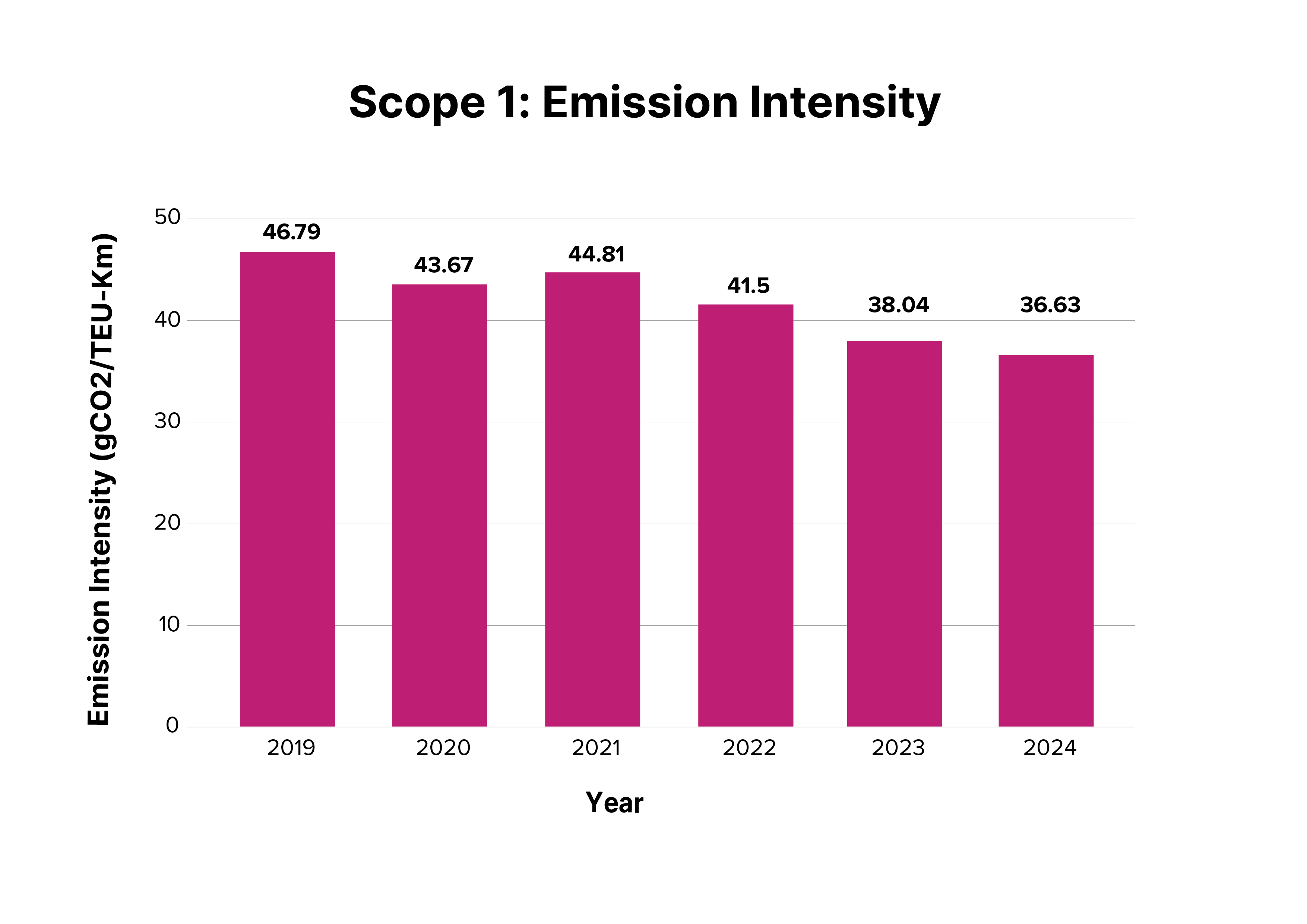
Scope 1 Emissions Intensity (grams of CO2 per TEU-Km, gCO2/TEU-Km)
| Year | CY2021 | CY2022 | FY2023 | FY2024* |
| Emission Intensity (gCO2/TEU-Km) |
44.81 | 41.50 | 38.04 | 36.63 |
Scope 1 Emission from Fuel Consumption (Tonnes of CO2, TCO2)
| Fuel type | CY2021 | CY2022 | FY2023 | FY2024* |
| Fuel oil | 9,946,604 | 8,614,645 | 9,476,766 | 10,702,683 |
| Gas oil | 981,151 | 774,152 | 793,794 | 828,805 |
| Natural gas | - | - | 6 | 45 |
| Total | 10,927,754 | 9,388,797 | 10,270,566 | 11,531,533 |
Scope 2 Emissions from Electricity Consumption (Tonnes of CO2, TCO2)
| CY2021 | CY2022 | FY2023 | FY2024* | |
| Market-based | 10,427 | 10,599 | 9,819 | 10,363 |
| Location-based | 10,476 | 10,549 | 9,780 | 10,401 |
176 local offices and locations were accounted for in our FY2024 inventory
Scope 3 emissions from fuel- and energy-related activities (tonnes of CO₂, tCO₂)
| Category | FY2023 | FY2024* |
| Category 3 - Fuel - and energy - related activities | 2,267,155 | 2,562,901 |
* Refers to assured numbers